Tuesday, March 4, 2014

Spring is in the air...maybe? Career goals and my life as a stay at home mommy.

It has been super RAINY here these past couple of weeks, which is great because we definitely needed the rain and I know my little garden plot is just loving the extra moisture! I'm planning to post photos of the plot real soon. I've got some lettuce, carrot, and radish seedlings coming up and I also planted a few starters (peas and green onions).

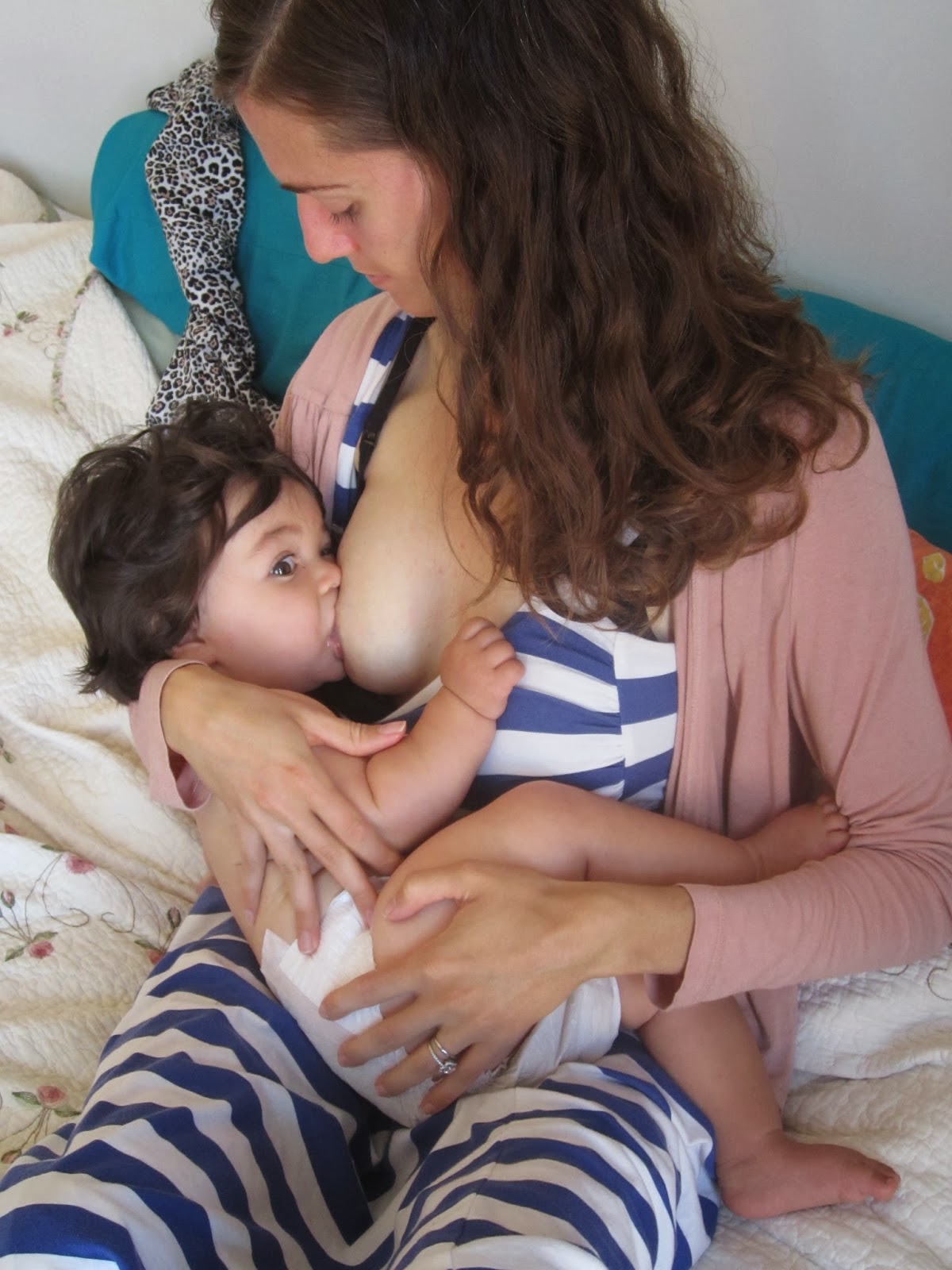
In other news, I'm excited to announce that I have officially completed my training to become a lactation educator/counselor! This means I can start teaching breastfeeding classes and offering breastfeeding support to new and expecting moms.

Right now, my biggest desire is to get out into the field and gain some practical experience in this area. I'm not sure if I want to eventually take the lactation consultant exam (which would also require more coursework) but that possibility is definitely on my radar. At this point, I mostly just want to start working directly with new moms. I've definitely been bitten by the "birth bug", as they say, as I am finding myself more and more passionate and interested in all things relating to pregnancy, childbirth, and the postpartum period. When I think about helping and guiding women as they make the beautiful, yet delicate and often challenging, transition into motherhood, I am overcome with feelings of excitement and fulfillment, so that must mean something, right?!

As of right now, I am working on becoming certified as a postpartum doula so that I can begin providing breastfeeding support as well as support in other areas of the postpartum period to new moms. I have plans to volunteer as a doula at San Francisco General Hospital, but the process for working in a hospital is long and bureaucratic, so it will probably take a couple of months for me to get started.

I am loving my time at home with my baby girl. Some days are tough, of course, but overall it has been an amazing experience to be home with her and I am so glad I've been able to dedicate myself fully to her, especially while she is still so small and dependent on me. I know someday I'll return to the paid working world, but for now, I am enjoying this precious time with my little one and learning a lot from her as well. Our days are repetitive--and yes, sometimes boring--but they are also usually calm, happy, stress-free, and punctuated with little magical moments that I wouldn't trade for anything else in the world. Though being a stay-at-home mom is hard work (I totally understand now why people say it's the toughest job in the world!) and can sometimes be quite isolating, it is also one of the most selfless things I have done in my life and I take great pride in that.

I've also found that I have enjoyed being home with E more and more as she's gotten older. I love our little routines and seeing her face light up every time I go into her room to get her after a nap. When I feel bored (which is rare because there really isn't much time to feel bored in my day!), all I have to do is get down on the floor with her, play with her, watch her a bit, and then I realize that nothing is boring to her--she's constantly analyzing, learning, examining. She reminds me every day that the world has so much to offer and that, as adults, many of us have lost our sense of wonder and adventure. Life feels dull and boring because we let it become that way.

So babies have a lot to teach us really. And I find myself turning to my daughter when I yearn to experience some of life's simplest pleasures. She's taught me so much already.


Here's my new certificate! (which unfortunately got crumpled in the mail...ugh)

Wednesday, January 29, 2014

Southwestern Black Bean Burgers


J has been helping out in the kitchen a bit more lately since he has some free time right now. Last night, we made this yummy tuna casserole and black bean patties using the recipe below from the Moosewood Cookbook. I didn't know what to expect from the burgers since we had never made anything like them before. They were delicious! 

Make these on a day when you have some extra time on your hands because they do take a little while to put together. Also I recommend making salsa, pico de gallo, or guacamole to throw on top of them.

Southwestern Black Bean Burgers
from Moosewood Restaurant
Serves: 6

Ingredients
2 teaspoons olive oil
1 cup chopped onions
2 teaspoons ground cumin
1 teaspoon ground coriander
¼ teaspoon salt
Dash of ground black pepper
1 cup finely chopped mushrooms
1 cup grated carrots
1 fresh chile, minced or ¼ teaspoon cayenne
¼ cup orange juice
1 cup ground corn tortilla chips (Whirl tortilla chips in a food processor until they reach the consistency of coarse meal.
2 15-ounce cans black beans, rinsed and drained
1 large egg, lightly beaten

Instructions
Preheat oven to 375°
Warm the oil in a skillet on medium-high heat
Add the onions and cook for 5 minutes, stirring often.
Stir in the cumin, coriander, salt, and pepper and cook a couple of minutes until the onions soften.
Add the mushrooms, carrots, chiles, and orange juice.
Lower the heat to medium, cover and cook, stirring occasionally, about 8 minutes or until tender.
While the vegetables cook, combine the ground tortilla chips, beans, and egg in a large bowl and mash well with a potato masher, or pulse in a food processor and then transfer to a blow.
When the vegetables are tender, drain, and stir into the bean mixture.
Form the burger mixture into six patties (a heaping ½ cup per burger), and place on a lightly oiled baking sheet.
Bake in a preheated 375° oven for 25 minutes, until firm and lightly crusted.

Notes
Serve on romaine, topped with tomato and avocado salsa, or optional Monterey Jack cheese.


Saturday, January 11, 2014

Baked Lima Beans

We've all been feeling a bit under the weather this past week, especially J, who seems to have caught a nasty cold on the plane ride home. So, in true Manon style, I've been turning to the best form of medicine out there to help fight off the germs in our household: food. Yesterday, I made a hearty veggie soup with some root vegetables from our CSA box. Today, I threw together a chicken soup with some leftover chicken pieces we had. I also made these delicious beans, which turned out to be the perfect comfort food for the cloudy day we had today: 

Baked Lima Beans 
Adapted from: http://www.beardandbonnet.com/mediterranean-style-baked-lima-beans-gluten-free-vegan/

1/2 lb. dried lima beans (I used small ones but large would work too)
1 quart water
1 bay leaf
1 cup of vegetable or chicken broth or water
2 Tbs vegetable oil
2 cloves garlic, minced
1 small yellow or white onion, chopped
1 can diced tomatoes (undrained)
2 tsp red wine vinegar
1 Tbsp tomato paste
1/2 Tbsp agave nectar
2 tsp dried oregano
1 tsp dried thyme
1 tsp salt
1/8 tsp ground nutmeg
freshly ground coarse black pepper

Rinse the lima beans and soak them overnight for 8 hours. In the morning, drain them and place them in a crockpot with fresh water (the water should cover the beans by about an inch or two). Cook them on low heat for about 6 or 7 hours or until tender.

When they are done cooking, preheat the oven to 375 degrees. Heat the oil in a dutch oven or medium sauce pan. Add the garlic and onion, cook for about 3-4 minutes, stirring often. Add the tomatoes, stock, red wine vinegar, tomato paste, agave syrup, spices, salt and pepper. Bring to a boil, stirring frequently, and allow the mixture to simmer for 10 minutes so that the sauce thickens and the flavors meld together. After 10 minutes, mix in the lima beans and bay leaf (if using a dutch oven) and bake beans for 30 minutes (covered), stirring occasionally. If using a sauce pan, transfer the sauce to a casserole dish, mix in the beans and bay leaf, and bake (covered) for 30 minutes.

Remove the lid for the last 5-10 minutes to reduce the sauce a little bit more. Allow beans to cool for 10 minutes before serving. 

Serves 3-4

Enjoy!


Friday, January 3, 2014

10 Month Update: Where Has the Time Gone?


My beautiful baby girl is growing up so quickly. In just two short months, she will be turning a year old, and that is something that is hard for me to wrap my head around. We have spent the last three weeks in Los Angeles with both sets of grandparents and she already seems bigger, stronger, more coordinated, and more toddler-like than when we left the bay area just a few weeks ago.
They change so quickly at this age. It's exciting and a little bit sad at the same time. Each day, each little moment, seems so fleeting, like a feather blowing in the wind that is always within reach but never able to be caught. Early motherhood is a funny thing; the days drag on and on at times, and yet, when looking back, time seems to compress in a weird way. Memories are blurred, yet strangely distinct, and the whole thing feels like a movie you just fast-forwarded through. You catch glimpses of the important parts but you wish you could go back and pause time just for a minute to absorb the memory a little better.
I read a lot of mommy blogs these days. One of my favorites, Girl of Cardigan, has a beautiful post entitled “Why I Wear My Daughter—Because You Asked” (for those of you who don't have kids, “wearing” a baby refers to the practice of carrying the baby around in a sling or carrier, so they are attached to your body, rather than in a separate entity, like a stroller).
"I wear her because I prefer our hearts squarely leveled and the space between us perfectly sized for the whispering of secrets and the exchanging of smiles. I wear her because something of the days when we shared one body returns to us, and we are a unit, watching and interacting from the same vantage point...I wear her because my independent, wild, and magical girl is not the sort to cling to my lap in playgroups or resist being passed around rooms. She has never met a stranger, my extroverted wonderful child, and I wear her because the moments of “just us-ness” are fleeting and coveted and selfishly hoarded.  I wear her so I can send her out again, knowing she knows she will soon be back in my arms where I can whisper her secrets and nuzzle that noggin...I wear my daughter because life is short. These precious days when she is small and clutch-able, all tiny grabbing fingers and sweet baby kisses and that incredible incomparable head-smell – these days are mere minutes, here and gone and never to return."
This passage struck a chord with me because it reminded me so much of E. For the most part, my daughter is not the sort to fear being held by new people as long as she gets a chance to warm up to them a bit. She's not the sort to shy away from new situations and she's more independent than I like to admit. In new places, she ventures out confidently to explore, always looking back every now and then to make sure I am still there. I am proud of her confidence, and yet, each day that she grows a little less dependent on me is also a reminder of how quickly she is changing and how fast her first year of life is passing by.
I'm doing my best to journal often, record milestones, take pictures and videos, and relish this sweet time with my baby, but I know that all too soon, she will enter toddlerhood and I'll be chasing after her as she ventures bravely out into the big wide world. 

Sunday, November 3, 2013

The Hidden Dangers of GMOs

A couple of days ago I watched a fascinating documentary about Genetically Modified Organisms (GMOs) that I wanted to share with you. The film, called Genetic Roulette: The Gamble of our Lives, was created by Jeffrey M. Smith, founder of The Institute for Responsible Technology (IRT), bestselling author, and an expert in GMO foods. The goal of IRT is to educate policy makers and the public about genetically modified foods and crops by collaborating with experts in this field and presenting research on the health effects of GMOs.

The film, which I highly recommend, is available for free online until Nov. 8th and you can watch it here: http://geneticroulettemovie.com/grm/. (After Nov. 8th, you'll have to pay a small fee to watch it.)

I was blown away by this film. Though I generally consider myself pretty well-informed when it comes to food justice and health issues, there was a lot in this movie that I did not know about and I wanted to share some of these interesting facts with you.

As you may already know, GMOs are created when a species is injected with DNA from another species, basically producing a man-made crop that would never occur naturally in the wild. Luckily, most of our food is not genetically modified, but the few key crops that are altered are also some of the most common ingredients in the foods we eat today. Here is a list of the main commercial GMO crops (taken from the Non-GMO Project):

Alfalfa (first planting 2011)
Canola (approx. 90% of U.S. crop)
Corn (approx. 88% of U.S. crop in 2011)
Cotton (approx. 90% of U.S. crop in 2011)
Papaya (most of Hawaiian crop; approximately 988 acres)
Soy (approx. 94% of U.S. crop in 2011)
Sugar Beets (approx. 95% of U.S. crop in 2010)
Zucchini and Yellow Summer Squash (approx. 25,000 acres)

At first glance, this list seems pretty short and harmless. However, the problem is that corn and soy are in everything. Just check the label on most packaged or processed products you buy at the store and you are sure to see an ingredient with the word "corn" or "soy" in it. And unless that product is certified organic or "Non-GMO Verified," you better believe that it was made with GMO corn or soy. Sugar beets are also very common in any food that has "sugar" listed as an ingredient on the back.

So what's the problem with GMOs?

In this film, I learned that researchers are finding a relationship between consumption of foods containing GMOs and food allergies, gastrointestinal problems, birth defects, and other health problems. In fact, the link is so clear that many doctors are starting to prescribe non-GMO diets to their sick patients and seeing dramatic results.

Furthermore, we are creating genetically-modified crops that are pesticide resistant or "Roundup Ready" as they are called (Roundup is the name of Monsanto's brand of pesticide). This means we can spray as many chemicals on them as we want and the plants will not die (do you really want to be eating a plant that has been bathed in toxic pesticides? Maybe the plant can survive that, but will you?). They've done studies on plants sprayed with Roundup and have found that these crops are also nutrient-deficient compared to their organic counterparts, so it's not like there's some hidden advantage to growing these kinds of crops. Not only that, but we are also now creating crops that produce their own pesticides! The stomachs of insects that eat these crops literally explode. Have we considered what these crops might be doing to our stomachs when we eat them? We may not be insects, but we are living organisms, and it scares me to think about what might be happening in our GI tract when we eat this stuff.

Two of the biggest GMO crops in our country are corn and soy (80% of these crops are genetically modified). We feed these crops not only to ourselves (in the form of corn oil, high fructose corn syrup, soy lecithin, etc.) but also to our livestock. Research and testimonials from farmers are showing that livestock fed GMO diets are sicker and dying because of it. This can't be good.

The worst part about all of this? We can't rely on the FDA to keep us safe or to publish truthful unbiased research regarding the effects of GMO crops on our health because a lot of these guys either work for Monsanto or have connections to Monsanto, the big biotech company that is engineering all of these genetically modified crops.

So what do we do?

1. Watch the film and educate yourself. I learned a lot from this film and I think you will too.

2. Spread the word. Plenty of cities around the U.S. have action groups to help educate the public about the dangers of GMOs and urge policymakers to label GMO products. The Institute for Responsible Technology also has a web page to help connect you with local activists in your area (click here).

3. Make a commitment to reduce or eliminate your consumption of GMOs. You can download the Non-GMO Shopping Guide to help you buy products from companies that are "Non-GMO Verified."

4. Don't lose hope! We have already succeeded at keeping genetically altered tomatoes out of the market, as well as other crops, and with enough support, we can pressure our government to start labeling GMOs (as many other governments around the world have already done) and to start publishing accurate research about these harmful crops.

Thursday, October 10, 2013

Life Updates and New Career Goals!


Wow. I don’t know about you guys, but the past few months have been insanely busy around here! J worked full-time at eBay all summer, then we had our wedding in August (which was absolutely amazing, but also a lot of work!), and soon after that J returned to school/teaching, which has been very time-consuming for him. On top of all of the stay-at-home mommy duties, I’ve started nannying twice a week, which involves picking a three-year-old up at preschool and bringing her back to our place to entertain both her and Emi. It’s certainly helped me gain perspective on what it might be like to someday have to care for two of my own kids (“busy” doesn’t quite sum it up!). In the midst of all that, I’ve also been making some pretty significant career decisions of my own; I’ve decided to return to school to pursue a degree in lactation education. So, I’m signed up for an online class through UC San Diego that is the first step in the process of becoming a lactation educator. I’ve been learning a lot and have really enjoyed the course so far.

My decision to pursue this career came about from my own experiences and challenges with breastfeeding and my desire to help other new moms. When Emi was born, I had absolutely no idea how difficult it would be to breastfeed, let alone how much support (both emotional and physical) I would need from lactation specialists in order to succeed at breastfeeding. In fact, I was so convinced that it would be easy peasy (you just attach the kid to the boob and the rest is history, right?) that I didn’t even bother to take a breastfeeding class or read a book about breastfeeding.

Towards the end of my pregnancy, when my mother (who breastfed both her children) nonchalantly suggested that I get in touch with the local La Leche League to meet some other women who might be able to help me in the near future, I shrugged it off and dismissed her advice. Little did I know just how thankful I would be to eventually get through to one of those LLL leaders about two weeks after Emi was born, desperate for help, because my nipples were incredibly sore and I still hadn’t figured out how to latch her on so that it didn’t hurt like hell. That woman was a savior, as were the lactation consultants I met with during Emi’s doctor visits. I still remember one particular visit (probably 2 or 3 weeks postpartum) during which I literally broke down in tears in front of both the lactation consultant and pediatrician because of how exhausted, overwhelmed, and frustrated I was with my inability to enjoy breastfeeding. I felt like a failure because feeding my baby was not the amazing enjoyable "bonding experience" that I was led to believe it would be (though it eventually became that way after breastfeeding was successfully established). They kept telling me it “wasn’t supposed to hurt” and every time I heard that statement, I died a little inside and wanted to punch whoever said it. I now know that they meant well and weren’t saying it to anger me, but as a way of encouraging me to continue to seek help until it no longer hurt (because if it hurts, your latch or positioning probably need some tweaking…or, in my case, a lot of tweaking, and oftentimes the only way to fix that is to have a trained professional watch you nurse your baby).

I also arrived at this whole field from a health perspective since I have always been passionate about healthy living, wellness, and food. We all know that breastmilk is incredibly healthy for babies and contains things that formula cannot replicate (such as important antibodies that boost a baby’s immune system), but did you know that it’s also incredibly helpful for the mother and for the lifelong health of that baby? Mothers who breastfeed have reduced rates of breast and ovarian cancer, less osteoporosis later in life, and are less likely to hemorrhage after the birth. The longer a baby is breastfed, the less likelihood that baby will develop allergies, asthma, diabetes, and obesity later in life. That baby is also less likely to have gastrointestinal problems.

I know some mothers cannot breastfeed due to medical reasons, but I’m convinced that most mothers, if provided with the right support and resources both prenatally and postnatally, can learn to breastfeed successfully, as I did. It’s my mission to help as many new moms as I can with that, especially young low-income moms, since they are the ones least likely to attempt and succeed at breastfeeding. I am so thrilled to be entering this field and cannot wait to share my experiences and knowledge with you all along the way!


 "Plunge boldly into the thick of life, and seize it where you will, it is always interesting" - Johann Wolfgang von Goethe


Friday, August 30, 2013

If You Want to Change the World, Love a Woman

If you want to change the world… love a woman-really love her.
Find the one who calls to your soul, who doesn’t make sense.
Throw away your check list and put your ear to her heart and listen.
Hear the names, the prayers, the songs of every living thing-
every winged one, every furry and scaled one,
every underground and underwater one, every green and flowering one,
every not yet born and dying one…
Hear their melancholy praises back to the One who gave them life.
If you haven’t heard your own name yet, you haven’t listened long enough.
If your eyes aren’t filled with tears, if you aren’t bowing at her feet,
you haven’t ever grieved having almost lost her.

If you want to change the world… love a woman-one woman
beyond yourself, beyond desire and reason,
beyond your male preferences for youth, beauty and variety
and all your superficial concepts of freedom.
We have given ourselves so many choices
we have forgotten that true liberation
comes from standing in the middle of the soul’s fire
and burning through our resistance to Love.
There is only one Goddess.
Look into Her eyes and see-really see
if she is the one to bring the axe to your head.
If not, walk away. Right now.
Don’t waste time “trying.”
Know that your decision has nothing to do with her
because ultimately it’s not with who,
but when we choose to surrender.

If you want to change the world… love a woman.
Love her for life-beyond your fear of death,
beyond your fear of being manipulated
by the Mother inside your head.
Don’t tell her you’re willing to die for her.
Say you’re willing to LIVE with her,
plant trees with her and watch them grow.
Be her hero by telling her how beautiful she is in her vulnerable majesty,
by helping her to remember every day that she IS Goddess
through your adoration and devotion.

If you want to change the world… love a woman
in all her faces, through all her seasons
and she will heal you of your schizophrenia-
your double-mindedness and half-heartedness
which keeps your Spirit and body separate-
which keeps you alone and always looking outside your Self
for something to make your life worth living.
There will always be another woman.
Soon the new shiny one will become the old dull one
and you’ll grow restless again, trading in women like cars,
trading in the Goddess for the latest object of your desire.
Man doesn’t need any more choices.
What man needs is Woman, the Way of the Feminine,
of Patience and Compassion, non-seeking, non-doing,
of breathing in one place and sinking deep intertwining roots
strong enough to hold the Earth together
while she shakes off the cement and steel from her skin.

If you want to change the world… love a woman, just one woman .
Love and protect her as if she is the last holy vessel.
Love her through her fear of abandonment
which she has been holding for all of humanity.
No, the wound is not hers to heal alone.
No, she is not weak in her codependence.

If you want to change the world… love a woman
all the way through
until she believes you,
until her instincts, her visions, her voice, her art, her passion,
her wildness have returned to her-
until she is a force of love more powerful
than all the political media demons who seek to devalue and destroy her.

If you want to change the world,
lay down your causes, your guns and protest signs.
Lay down your inner war, your righteous anger
and love a woman…
beyond all of your striving for greatness,
beyond your tenacious quest for enlightenment.
The holy grail stands before you
if you would only take her in your arms
and let go of searching for something beyond this intimacy.

What if peace is a dream which can only be re-membered
through the heart of Woman?
What if a man’s love for Woman, the Way of the Feminine
is the key to opening Her heart?

If you want to change the world…love a woman
to the depths of your shadow,
to the highest reaches of your Being,
back to the Garden where you first met her,
to the gateway of the rainbow realm
where you walk through together as Light as One,
to the point of no return,
to the ends and the beginning of a new Earth.

~Lisa Citore


What a beautiful poem. It's a good reminder that femininity has an important place in today's society and that we should all strive to achieve a healthy balance of feminine and masculine qualities in our lives. Some might disagree with me on this, but I believe that the new wave of American feminism seeks to eradicate (or at least downplay) more "feminine" qualities (that includes being sensitive, intuitive, cooperative, soft, graceful, and motherly) in favor of more "masculine" ones (being assertive, strong, rational, logical, dominant, and a provider). Why not strive to achieve both feminine and masculine qualities in our lives? 

Perhaps it's the separation that makes some people uncomfortable, because they don't like classifying certain traits as inherently "feminine" or "masculine" (or don't think that they should be classified that way anyway), and I get that. However, I would also posit that this discomfort is a byproduct of American feminism, which encourages us to value one set of qualities over another, thus making "feminine" qualities seem less appealing or a sign of weakness. This poem reminds us that our feminine side has a lot to offer. The line "love a woman" can be interpreted literally, or we can think of it metaphorically, as a call to embrace the feminine power within all of us and to trust our emotions and intuitions as much as we trust the more logical and rational parts of ourselves.

If you'd like to learn more about the author of this poem, Lisa Citore, you can visit her website here. She's also written the counterpart to this poem, "If You Want to Change the World, Love a Man" which is available here.